Unlocking the Potential of 3D Printing: A New Era in Product Innovation
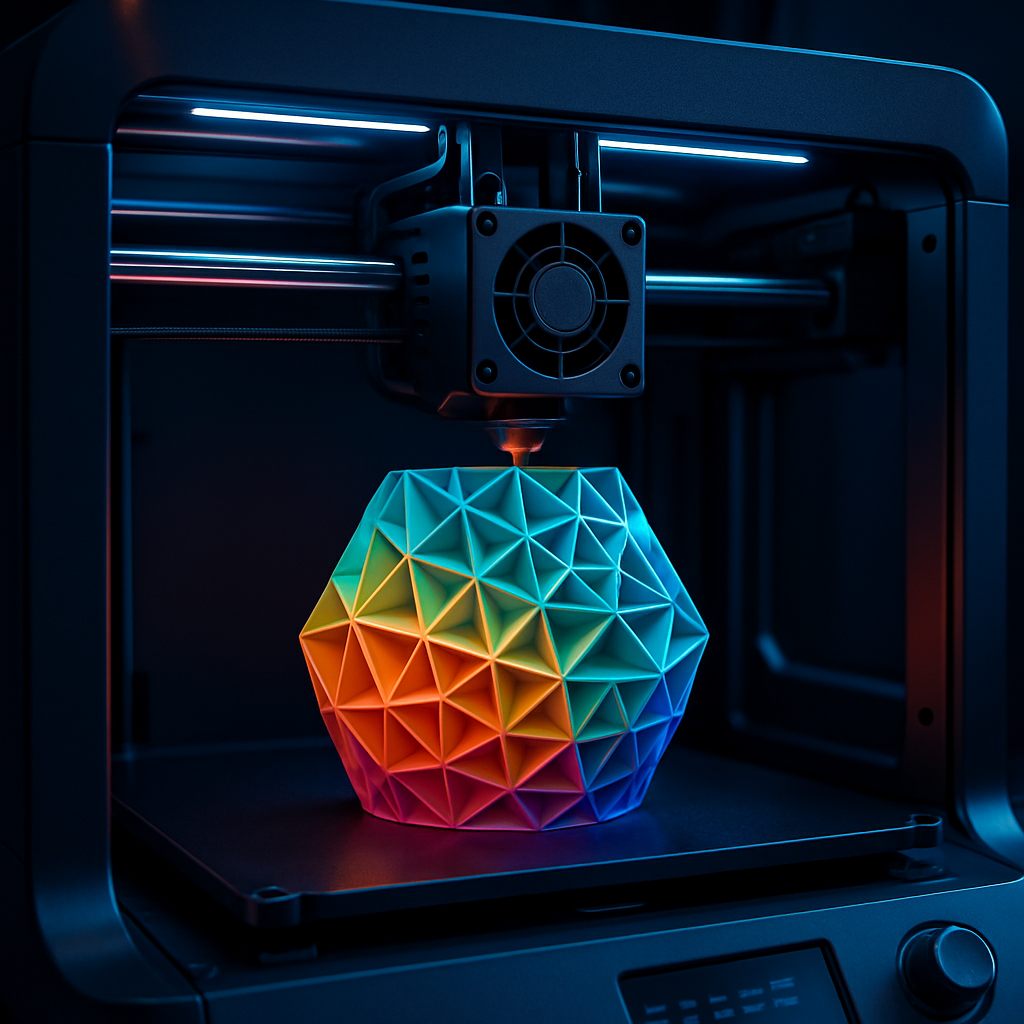

Unlocking the Potential of 3D Printing: A New Era in Product Innovation
In the rapidly evolving landscape of product development, 3D printing stands out as a transformative technology with the potential to redefine how we create and deliver products. Once a tool for prototyping, 3D printing has evolved into a sophisticated process capable of producing complex, functional, and customizable items across various industries. This article delves into the multifaceted benefits of 3D printing, exploring its impact on innovation, efficiency, and market competitiveness.
The Evolution of 3D Printing
3D printing, or additive manufacturing, began as a niche technology primarily used for creating prototypes. Over the years, advancements in materials and printing techniques have expanded its applications beyond simple models to include intricate components and even complete products. This evolution marks a significant shift in manufacturing capabilities, offering businesses unparalleled flexibility and design freedom.
A Brief History
3D printing first emerged in the 1980s, with the invention of stereolithography. Since then, the technology has diversified into various methods, including selective laser sintering (SLS), fused deposition modeling (FDM), and digital light processing (DLP), each offering unique advantages depending on the application.
The Impact of 3D Printing on Product Development
The integration of 3D printing into product development processes has led to several key benefits:
Accelerated Prototyping
Traditional prototyping methods can be time-consuming and costly. With 3D printing, designers can rapidly create and test prototypes, iterating designs in hours rather than weeks. This acceleration allows for faster decision-making and reduces the time-to-market for new products.
Design Flexibility
3D printing empowers designers with a level of flexibility previously unattainable. Complex geometries, intricate structures, and bespoke designs can be realized without the limitations of conventional manufacturing. This flexibility fosters innovation, enabling the creation of unique products tailored to specific customer needs.
Cost Efficiency
By minimizing material waste and reducing the need for multiple manufacturing steps, 3D printing can significantly lower production costs. This is particularly beneficial for low-volume production runs and custom orders, where traditional methods may be economically unfeasible.
Industry Applications
From healthcare to aerospace, 3D printing is making waves across a multitude of sectors:
Healthcare Innovations
In the medical field, 3D printing is revolutionizing personalized medicine. Custom prosthetics, dental implants, and even bioprinted tissues are becoming increasingly feasible, offering patients tailored solutions that enhance comfort and effectiveness.
Aerospace Advancements
Aerospace manufacturers are leveraging 3D printing to create lightweight components that improve fuel efficiency. The ability to produce complex parts in a single step reduces assembly time and enhances the overall performance of aircraft.
Consumer Products
The consumer goods sector is also benefiting from 3D printing. From fashion accessories to home decor, the technology enables the creation of personalized products that cater to individual tastes, offering a unique selling proposition in a competitive market.
Challenges and Future Directions
While 3D printing holds immense promise, it is not without challenges. Material limitations, production speed, and the need for skilled technicians remain hurdles to widespread adoption. However, ongoing research and technological advancements continue to address these challenges, paving the way for broader implementation.
Overcoming Material Constraints
Research into new materials and composites is expanding the possibilities for 3D printing. Metals, ceramics, and even food-grade materials are being developed, broadening the scope of applications and enhancing the durability and functionality of printed products.
Enhancing Production Speed
Innovations in printer technology are improving production speeds, making 3D printing more viable for mass production. High-speed printers and multi-material capabilities are on the horizon, promising to further disrupt traditional manufacturing paradigms.
Conclusion
As we navigate an era of rapid technological advancement, 3D printing emerges as a critical tool for product innovation. Its ability to streamline processes, reduce costs, and foster creativity positions it as a catalyst for change across industries. By embracing this technology, businesses can unlock new opportunities, drive growth, and maintain a competitive edge in an ever-evolving market.
In conclusion, the potential of 3D printing is limited only by our imagination. As the technology continues to mature, it will undoubtedly play a pivotal role in shaping the future of product development, offering solutions that were once thought impossible.
Stay in the loop.
Join 5,000+ founders receiving weekly insights on retail scaling and operations.
Get retail growth strategies
delivered to your inbox.
READY TO UPGRADE YOUR OPERATIONS? START TRIAL FREE FOR 30 DAYS.