Unleashing the Power of Augmented Reality in Product Development
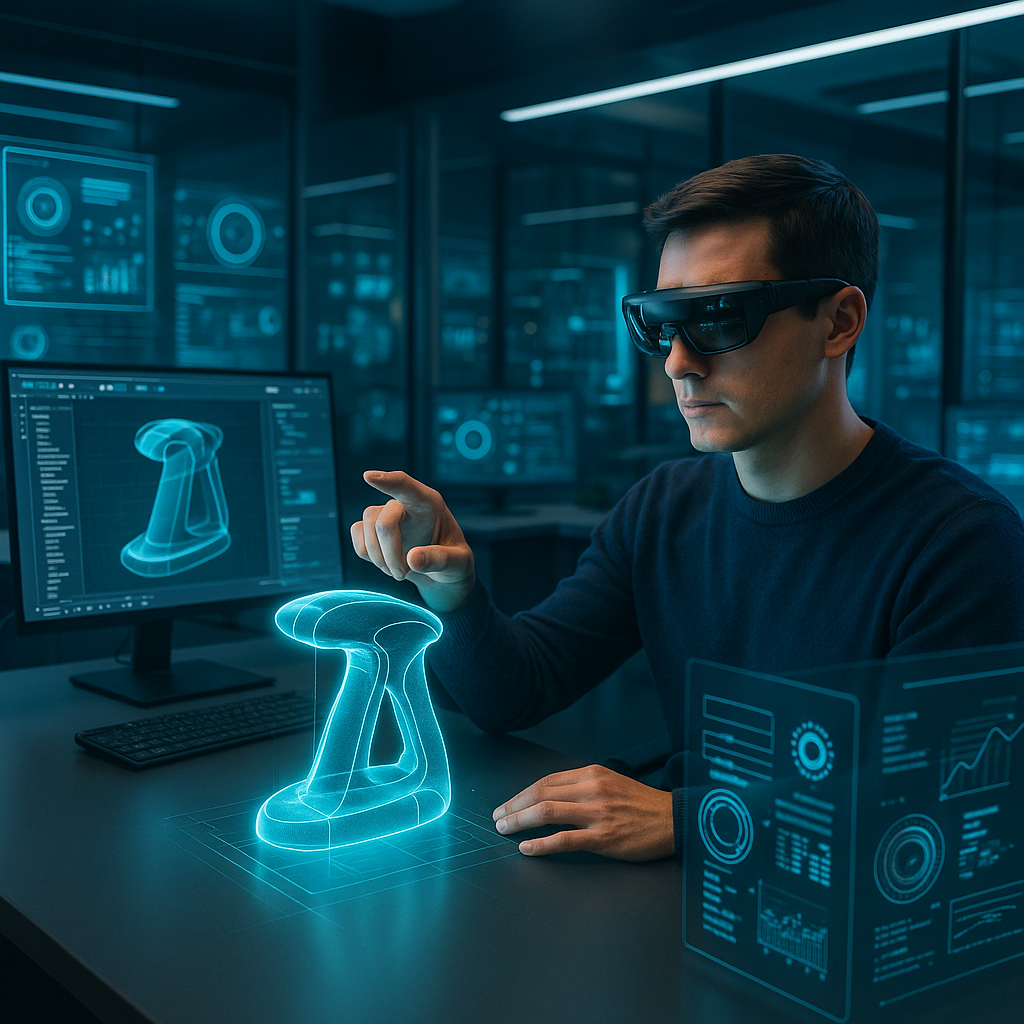

Unleashing the Power of Augmented Reality in Product Development
Introduction
In the rapidly evolving world of technology, augmented reality (AR) is emerging as a transformative force, particularly in product development. This innovative technology is redefining how companies design, prototype, and market their products. AR overlays digital information onto the physical world, offering a dynamic, interactive experience that enhances the development process. In this blog post, we delve into the profound impact of augmented reality on product development, exploring its benefits, applications, and future potential.
The Role of Augmented Reality in Design
Enhancing Visualization
One of the most significant advantages of augmented reality in product development is enhanced visualization. AR allows designers to visualize products in a real-world context, providing a clearer understanding of how a product will function and appear in its intended environment. This capability is particularly beneficial in industries such as automotive and architecture, where scale and context are crucial.
- •Real-Time Feedback: AR enables real-time feedback, allowing designers to make immediate adjustments to prototypes, reducing the time and cost associated with traditional trial-and-error methods.
- •Improved Collaboration: Teams can collaborate more effectively using AR, as it allows multiple stakeholders to view and interact with a product simultaneously, even from different locations.
Reducing Design Errors
Design errors can be costly and time-consuming. AR minimizes these errors by allowing designers to identify potential issues early in the development process. By interacting with a 3D model of the product, teams can spot design flaws before they become costly mistakes.
Prototyping with Augmented Reality
Faster Prototyping
Traditional prototyping can be a lengthy and expensive process. AR accelerates this process by enabling digital prototyping. Designers can create and test virtual prototypes, significantly reducing the need for physical models.
- •Cost-Effective: Digital prototyping is more cost-effective than creating multiple physical models, allowing companies to allocate resources more efficiently.
- •Iterative Design: AR supports iterative design, enabling teams to test and refine prototypes quickly, leading to more innovative solutions.
Enhancing Product Testing
AR enhances product testing by allowing developers to simulate real-world conditions. Virtual environments can replicate various scenarios, providing valuable insights into how products will perform.
- •Safety Testing: High-risk products can be tested safely in a virtual environment, reducing the need for physical trials that may pose safety risks.
- •Comprehensive Analysis: AR provides comprehensive data analysis, enabling developers to understand product performance in different conditions and make informed decisions.
Marketing and Consumer Engagement
Interactive Product Demonstrations
AR is revolutionizing how companies market their products. Interactive product demonstrations allow consumers to engage with products in a novel way, enhancing their understanding and interest.
- •Virtual Try-Ons: For products like clothing or eyewear, AR enables virtual try-ons, allowing customers to see how products look on them before purchasing.
- •Immersive Experiences: Brands can create immersive experiences that captivate audiences, leading to increased brand loyalty and customer engagement.
Personalized Customer Experiences
AR can personalize the customer experience by tailoring interactions to individual preferences. By analyzing user behavior and preferences, companies can offer personalized recommendations, improving customer satisfaction and retention.
The Future of Augmented Reality in Product Development
Integration with Other Technologies
The future of AR in product development is promising, particularly as it integrates with other technologies like artificial intelligence (AI) and the Internet of Things (IoT). These integrations will provide even more powerful tools for developers, enhancing innovation and efficiency.
- •AI-Driven Insights: AI can analyze AR data to provide insights into consumer behavior, helping companies refine their products and marketing strategies.
- •IoT Connectivity: IoT devices can provide real-time data to AR systems, enabling more accurate and dynamic product modeling.
Expanding Accessibility
As AR technology becomes more accessible, smaller companies and startups can leverage its benefits, leading to a more competitive market. The democratization of AR tools will democratize product development, fostering innovation across industries.
Conclusion
Augmented reality is reshaping product development, offering unprecedented opportunities for innovation and efficiency. By enhancing visualization, streamlining prototyping, and transforming marketing strategies, AR is empowering companies to create better products faster and more cost-effectively. As technology continues to evolve, the potential of AR in product development will only grow, offering exciting possibilities for the future.
Key Takeaways
- •Augmented reality enhances design visualization and reduces errors.
- •It accelerates prototyping, making it faster and more cost-effective.
- •AR transforms marketing with interactive and personalized experiences.
- •Future developments in AR promise even more innovation and efficiency.
Stay in the loop.
Join 5,000+ founders receiving weekly insights on retail scaling and operations.
Get retail growth strategies
delivered to your inbox.
READY TO UPGRADE YOUR OPERATIONS? START TRIAL FREE FOR 30 DAYS.